Research Program
The Research Program at DYP helps identify people with visual impairments across Siem Reap, Cambodia, collecting real data to improve services and community inclusion.
We work closely with local authorities, community leaders and disability networks to make sure no one is left unseen or unheard.
Why This Research Matters
Many people with visual impairments in rural areas never appear in official statistics. Without real data, it is difficult to plan services, allocate resources, or advocate for their rights.
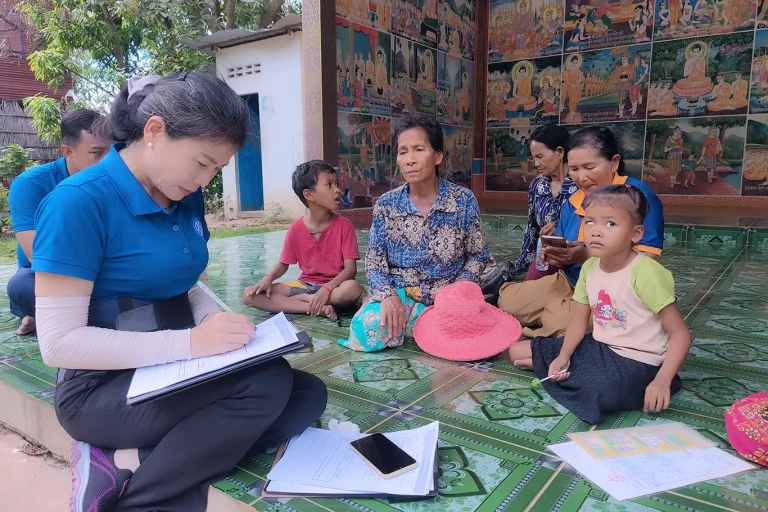
The Research Program is a core part of Discover Your Possibilities (DYP) and runs continuously to gather accurate, community-level information. Our team visits villages in Chi Kraeng, Svay Leu, Varin, and Siem Reap City to:
- Identify people who are blind or visually impaired and document their needs.
- Understand barriers to education, mobility, health, and independent living.
- Build trust with families, local authorities, and disability networks so support can be coordinated.
Our promise to participants
We follow clear ethics: voluntary participation, accessible communication, informed consent, and respect for privacy and dignity at every step of the process.
What We Do
The Research Program is not just surveys. It is a complete journey from finding people to connecting them with the right opportunities.
Discover
Household visits and interviews to identify people who are blind or visually impaired and understand their situation at home, school, and in the community, as well as their needs.
Connect
Refer target beneficiaries to DYP’s programs and to other services such as schools, NGOs, hospitals and social protection schemes.
Raise Awareness
Laptop with screen reader, braille or audio tools where possible, plus training on how to use accessibility features for study.
Safeguard Data
Store information in DYP’s secure data management system, with role-based access and strict confidentiality when using statistics for learning and reporting.
How We Work
Coordinate & prepare
Work with local authorities, disability networks and schools; prepare questionnaires and legal documents for safe and respectful fieldwork.
Visit & listen
Conduct household visits, listen to stories, and document needs related to education, mobility, health and daily living.
Enter & verify data
Enter information into DYP’s data management system, run duplication checks, and review with the team to ensure accuracy.
Use findings for action
Use statistics to select students for DYP programs, make referrals, and share anonymized insights with partners and donors.
The process is continuous. As new data comes in, DYP updates the database and uses it to guide planning, advocacy and individual support.
Ethics & data protection
- Participation is voluntary and based on informed consent.
- Information is stored in a secure system with role-based access and clear rules on who can see what.
- When we share results, we use anonymized statistics, not names or personal details.
- Staff receive guidance on safeguarding, privacy and respectful communication with people with disabilities.
These safeguards help families feel confident to share information and stay connected with DYP over time.
Results & Insights
Every completed questionnaire is more than data, it is a real person’s story. DYP uses the research findings to guide services, advocate for inclusion and inform donors and partners.
People recorded
Areas covered
Referrals made
Learning Center
Education
Data on school attendance and literacy helps DYP advocate for inclusive education, support teachers and identify who can benefit from the DYP Learning Center.
Skills & livelihoods
Information on skills, interests and daily activities guides selection for training and helps partners design realistic livelihood options for people with visual impairments.
Family & community support
Understanding family situations, support networks and barriers helps DYP and local authorities respond with more inclusive services and policies.
Support This Program
Why Funding Matters
Sustained funding allows us to keep research teams active, maintain secure data systems, and translate findings into practical referrals and community awareness. Your support means accurate evidence and faster pathways to inclusive services for people with visual impairments.
- Household interviews & accessibility checks in rural areas
- Participant counseling & guided referrals to services
- Community forums & awareness activities on visual impairment
- Data protection, hosting, and internal audits
- We follow strict privacy and financial transparency practices. Receipts available upon request.
How Funds Are Used
Fieldwork
Transport, accessibility tools, and supervision for field teams reaching remote areas.
Participant Support
Counseling materials, follow-ups, and motivational sessions for participants and families.
Systems
Secure database, maintenance, and continuous data protection improvements.
Learning
Data analysis, translation, and preparation of community-friendly research briefs and reports.
Talk with DYP about the Research Program
We are happy to speak with families, local authorities, NGOs or disability networks about how the Research Program works and how data can be used responsibly.